
2013 -2014 Officers

The Society of the Silurians

ALLAN DODDS FRANK TO SUCCEED MYRON KANDEL AS PRESIDENT
NEW TREASURER AND GOVERNORS NAMED

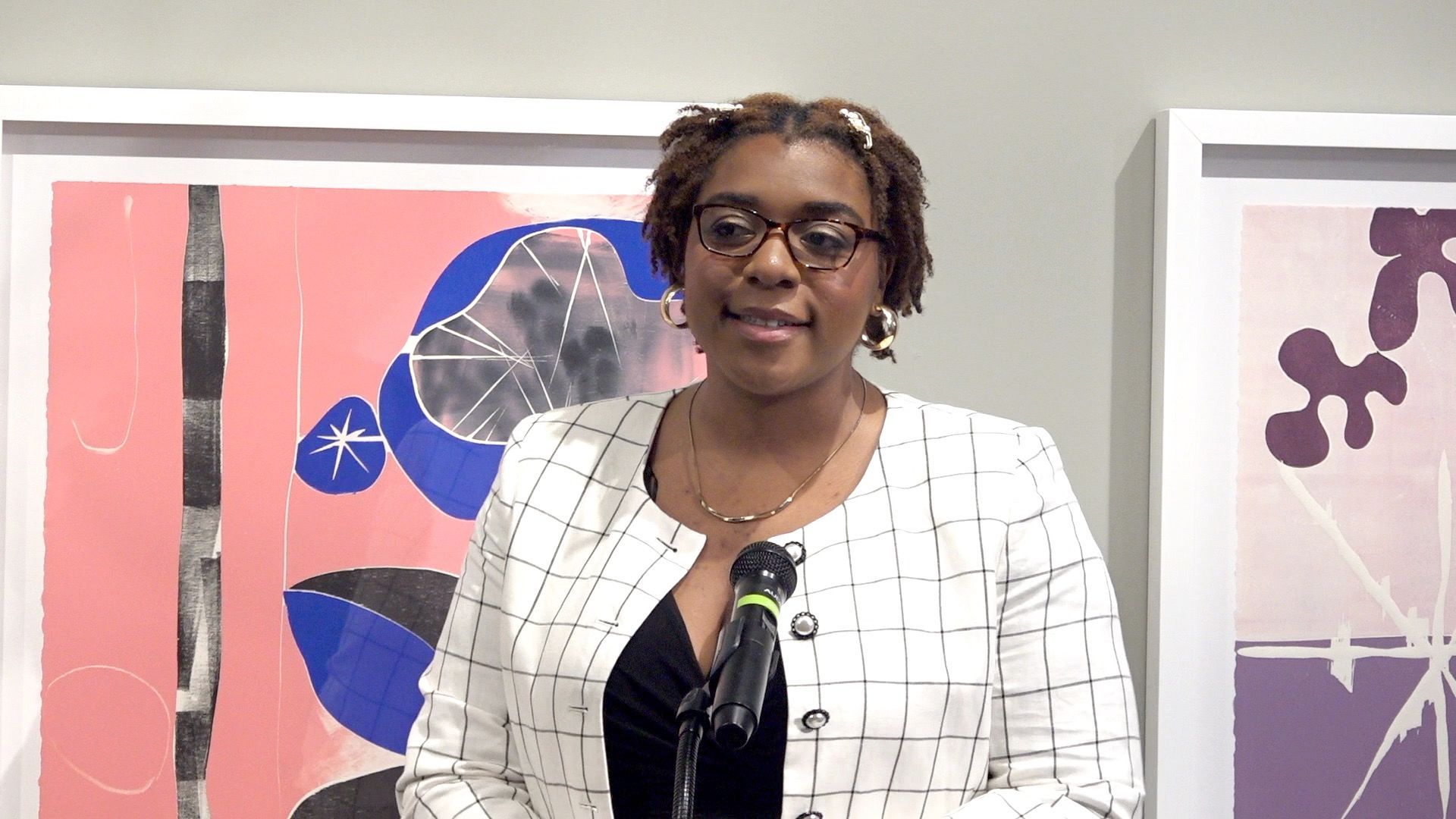
Allan Dodds Frank, a prize-winning newspaper, magazine and television investigative reporter, will succeed Myron Kandel as president of The Society of Silurians beginning in September. Kandel will have completed his second tour as president while Frank becomes the second member of his family to lead our organization. His father, the late Morton Frank,  publisher of the supplement “Family Weekly,” served as president from 1987 to 1988.

Allan Dodds Frank

Allan Dodds Frank

Frank was First Vice President of the Silurians this past year. Taking that post will be Betsy Ashton, who was Second Vice President, a seat that Joe Vecchione will occupy.  Linda Amster will stay on as Secretary; and Karen Bedrosian Richardson will replace Mort Sheinman as Treasurer. Sheinman will return to the Board of Governors in her place.

Jack Deacy and Anne Roiphe will also join the Board of Governors, filling the vacancies created by the departures of Max Nichols and Joan Siegel. Tony Guida, who is head of the Advisory Committee, and a former president, rejoins the board, replacing Joe Vecchione, and Mike Kandel will become chairman of the Advisory Committee.

Members remaining on the board are Ira Berkow, Bill Diehl, Gerald Eskenazi, Ricki Fulman, Linda Goetz Holmes, Bernard Kirsch, Enid Nemy and Ben Patrusky.

Allan Dodds Frank is currently working as a freelancer for national Web sites. He specializes in investigating complex white-collar crimes and terrorism. His first  job was at The Anchorage Daily News, 1970-1973. He joined The Washington Star’s  metro staff in 1973 and became a investigative reporter covering Federal courts and the Justice Department. After The Washington Star collapsed in 1981, he joined Forbes, where his long run of business investigative pieces began. While at Forbes, Frank reported from 30 countries, often writing about international corruption and money laundering.

In August 1988, Frank moved to ABC News as network television’s first business investigative correspondent. He roamed the country for the Sunday program “Business World with Sander Vanocur” and also appeared on “World News Tonight With Peter Jennings,” “Nightline,” and “Good Morning America.”  In 1994, Frank moved to CNN, where he was the investigative correspondent for “Moneyline With Lou Dobbs.” In 2002, Frank joined Bloomberg, where he was that network’s investigative correspondent.

He was president of the Overseas Press Club in 2009 and 2010 and founded OPC Global Parachute, a Web site funded by the Ford Foundation to help young journalists who want to report from abroad.

A Pittsburgh native and longtime New York resident, he got his B.A. in American history at Colgate University in 1969, and a Master’s of Science in journalism from the Columbia University Graduate School of Journalism in 1970. He earned a mid-career Masters of Studies in Law in 1981 as a Ford Foundation Fellow at the Yale Law School.

Frank has won numerous print and broadcast reporting prizes, including two national Emmys and the Gerald Loeb Award. This June, he will be honored by the Association of Certified Fraud Examiners with their “Guardian Award” for his longstanding commitment to exposing criminal behavior.  He also appears at length in this year’s documentary about Bernard Madoff, entitled “In God We Trust.”

He and his wife, Lilian M. King, were married at The Players Club in New York on July 30, 1988. They have twin daughters, Katharine and Melissa.

The Peter Kihss Award 2013

SOCIETY OF THE SILURIANS

2013 EXCELLENCE IN JOURNALISM AWARDS DINNER

Wednesday, May 22, 2013
6 PM

Honoring the year’s outstanding achievements
and presentation of the Peter Kihss Award to:

JoAnne Wasserman  

JoAnne Wasserman - 2013 Peter Kihss Award Honoree

JoAnne Wasserman – 2013 Peter Kihss Award Honoree

JoAnne Wasserman, Brooklyn bureau chief of the New York Daily News, is the 2013 recipient of our Peter Kihss award. The honor was created by the Society of the Silurians in memory of Peter Kihss of The New York Times, a legendary reporter and an inspiring mentor to younger journalists. She is the 23rd recipient of the award and the first woman to be so honored.

The award will be presented at the Silurians’ Annual Awards Dinner, to be held Wednesday, May 22, at The Players, with a reception starting at 6 PM and dinner at 7:15. In addition, Excellence in Journalism Awards will be presented to staffers at more than a dozen newspapers, wire and online services, magazines and radio and TV stations.

In her 30-year career in journalism, Ms. Wasserman has also been a reporter covering the City Hall and education beats at the New York Post; an assistant city editor at the News, and, for nearly a decade, the paper’s Brooklyn bureau chief while also launching the Upper Manhattan section for the News. She is admired for her dedication to helping young journalists in the tradition of Peter Kihss.

Members and One Guest, $100 EACH, Non-Members $120,
(Reservation form in the mail or click here to download)
Drinks: 6 P.M., Dinner: 7:15 P.M.
The Players Club
16 Gramercy Park South
New York City

Dennis Duggan Award to Irina Ivanova

This year’s Dennis Duggan Award winner is Irina Ivanova, a student at the CUNY Journalism School. Ms Ivanova finished near the top of the class during her first semester and has been selected by her fellow students to serve on the search committee looking for the next dean of the school.

She graduated cum laude from Amherst College. While there she worked on publications dealing with politics, culture, and the arts.  Two summers she interned at the Indypendent, a multimedia Web site dealing with community and cultural issues in New York.  Upon graduation she was hired by the Indypendent  where she worked as a reporter, writer, editor, and photographer. She later did community relations work for the Fashion Institute of Technology and had a fellowship with investigative reporter Wayne Barrett at The Nation Institute.

According to the CUNY faculty, some of her work brings Dennis Duggan to mind. One of her professors recently said: “She did a classic Dugganesque story last semester when she followed a long-time postman on his last delivery before he retired after 20-plus years on the same route.”

The award, which comes with a $1,000 stipend, will be presented to Ms Ivanova at the dinner on May 22.

April 18 Luncheon Features Steven Brill

S_Brill_luncheonSteven Brill lawyer, publisher, producer, editor, and reporter, discussing his historic Time Magazine article “Bitter “Pill: Why Medical Bills Are Killing Us.” It was the first time in its history the magazine devoted the entire feature section to a “special report.” Brill answered many questions about what is happening to medical care during the well attended meeting. (Photo by Mort Sheinman)

March 21 Remembering Mayor Koch Luncheon Photos

The panel assembled for our March 21 lunch either covered or worked for Mayor Koch had many stories to telll about the man who constantly wanted to know how he was doing.
koch-luncheon-post

Feb 21st Gail Sheehy Luncheon Photos

February Speaker, March Member

Gail Sheehy with our president, Mike Kandel, and speaking at our February 21 luncheon meeting. (Photos by Mort Sheinman)


Gail Sheehy with our president, Mike Kandel, and speaking at our February 21 lunch, has become a Silurian. Although she was overwhelmingly voted in by the membership that day, it was not official until March 6. Welcome Gail! (Photos by Mort Sheinman)

In Case You Missed It:

Alan Abelson,  former editor of Barron’s magazine died on May 9. According to The New York Times,  his column “made waves — sometimes tsunamis — by writing a pugnacious, sagacious stock market column that denounced Wall Street hucksterism and routinely rocked share prices.”  His daughter, Reed Abelson, a business reporter for The New York Times, said the cause was a heart attack. He was 87 and wrote his last column three months ago.
Read more…

The New York Times and Washington Post Companies both reported first quarter losses. The Times net income was $3.1 million, or 2 cents a share, down from $42.1 million or 28 cents a share a year earlier. Income from continuing operations declined to $3,1 million from $8.7  million last year. At the same time, the company announced plans to introduce lower-cost subscription models as part of a growth strategy. Read more…

The Washington Post Company reported sharp declines for the first quarter in,  primarily, its newspaper and education divisions. Net income was $4.7 million or 64 cents per share, an 85 per cent drop from $31 million, or $4.07 cents a share in the same quarter last year. The company cited $25 million in early retirement,  severance and restructuring costs and foreign currency losses being largely responsible. Read more…

New York magazine’s April 15 issue has lots of reading for us. First there is Frank Rich’s discussion of the future of The New York Times and Time magazine after being hit by the one-two punch of the recession and digital revolution. That comes with two sidebars. One an excerpt from Arthur Gelb’s book “City Room” about the last time The Times had money problems. The other is a Q&A with Tom Goldstein the publisher of Scotusblog on covering the court. Then there is Mark Danner’s conversation with Robert B. Silvers the editor of The New York Review of Books on the occasion of that publication’s fiftieth anniversary. Then there is a story about something called Buzzfeed and viral content and an algorithm which may be the future of it all. So if you don’t subscribe, check your local newsstand or incinerator room.

Stan Isaacs, who spent more than 40 years at Newsday as a reporter, columnist,and,temporarily, sports editor died on April 2. He was 83. As a writer he was known for his wit and cleverness. One of the first to recognize the importance of television  to sports, he began writing a column about it in 1978. At the time only one other newspaper published one. He wrote his last column in 1992. Click here for his complete obituary.

“Lucky Guy” a play by the late Nora Ephron starring Tom Hanks in his Broadway debut as the late columnist Mike McAlary opened April 1 at the Broadhurst Theater. According to Ben Brantley of The New York Times, the show is “both an elegy and valentine to a vanishing world held dear in the collective imagination of New Yorkers, that of the rough-and-tumble of big-city newsrooms and scoop hungry reporters.”  (The complete review can be found at http://theater.nytimes.com/2013/04/02/theater/reviews/tom-hanks-in-lucky-guy-at-the-broadhurst-theater.html?ref=theater&_r=0)

Frank A. Bennack, Jr., who has been the chief executive of the Hearst Corporation since 1979 is leaving that post and being replaced by Steven R. Swartz, the company’s chief operating officer. Bennack has overseen the diversification of the newspaper and magazine chain into television and other fields. Swartz began as a reporter for The Wall Street Journal and became the Page One editor. He was the founding editor of Smart  Money magazine before joining Hearst in 2001.

McCandlish Phillips, a former reporter for The New York Times, died on April 9 of complications from pneumonia. He was 85. An excellent reporter and skillful writer, he is best remembered for a story he wrote in 1965 revealing the fact that the head of the New York State Ku Klux Klan was born and raised an Orthodox Jew. Phillips, himself an evangelical Christian, left the paper in 1973 to preach the Gospel.
Harold M. Schmeck Jr., a science writer for The New York Times, died on April 1 at the age of 89. His specialty was medical research. In his 32 year career with The Times he covered medical developments from the health of astronauts to mapping the genome.
Paul Williams, considered  by many to be the founding father of rock journalism, died on March 27 at age 64. In 1966 as a freshman in college he created Crawdaddy! , the pop music magazine, and then quit school to turn it into a national publication. After leaving the magazine in 1968, he continued writing about rock music and its performers for various publications  such as Rolling Stone and also wrote a large  number of books on the subject.
Bob Teague
, the first black network TV reporter and one of the first in New York, died on March 28. He was 84. He began with ABC in 1962 and switched to WNBC the following year. For more than three decades he worked as a reporter, anchorman and producer.
Anthony Lewis, a two-time Pulitzer Prize winner died on March 25.  He was 85. As a reporter and columnist  for The New York Times he changed way the Supreme Court was covered through his understanding of the law and his ability to interpret their rulings for the reader.
A.B.C. (Cal) Whipple, who held many positions at Time-Life died on March 17. He was 94. He considered his proudest achievement leading the fight to get a photo of non-recognizable, dead American soldiers on a beach in New Guinea into Life in 1943. He had to fight the World War II censors all the way to the White House for permission.
(Complete obituaries of Williams, Teague, Lewis, and Whipple can be found at www.nytimes.com/obituaries)

On Monday, March 18, Columbia University announced that Steve Coll would be the new dean of the Graduate School of Journalism, succeeding Nicholas Lemann.  Coll is a two-time Pulitzer Prize winner. His first, shared with David A. Vise, was in 1990 for a series of articles in the Washington Post about the Securities and Exchange Commission. The second was in 2005 for his book “Ghost Wars: The Secret History of the C.I.A., Afghanistan and Bin Laden, From the Soviet Invasion to September 10, 2001.” He was the managing editor of the Post from 1998 to 2004 overseeing its transition to the Web. He joined the staff of the New Yorker in 2005. In 2007 he was named head of the New America Foundation, a nonpartisan public policy institute. He graduated cum laude from Occidental College in and is a member of Phi Beta Kappa.

On Tuesday, March 19, Sylvia Nasar, a tenured professor and co-director of business journalism, filed a lawsuit accusing Columbia and the journalism school of mishandling funds from a $1.5 million grant. Nasar a former reporter for The New York Times and author of the book “A Beautiful Mind,” is asking for punitive damages. She claims that over time she had to spend $174,000 of her own money for research and other expenses. According to The New York Times, a spokesperson for the school said that they had no comment about matters under litigation. The grant was an award from the Knight Foundation in 1998.   Read more….

Time Warner announced on March 6 that it will spin off Time Inc., its magazine division, to concentrate on movies and cable television. Time Inc., which publishes  Time, Sports Illustrated, People, and Money, among others, will be a separate publicly traded company. The decision was made after negotiations  with Meredith Corporation over the possible acquisition of certain Time Inc. titles collapsed.  Read March 6 here  and March 8 here.

Warren Buffet‘s annual letter to shareholders spelled out his faith in the profitability of newspapers.  Certain newspapers, that is. The complete text of his publishing strategy can be found…Read more

Starting in the fall, the 125-year-old International Herald Tribune will be renamed The International New York Times. At the same time the company will introduce a redesigned Web site aimed at an international audience. According to the article in the Busines Day section of the February 26  paper, The Times is making the change to “focus on its core New York Times newspaper and to build its international presence.” Read more…

A charming personal history of The New York Herald Tribune by Sam Roberts appeared as a City Room column in the New York section of The Times on March 7.  The piece is pegged to the changing of the name of what is now The International Herald Tribune to The International New York Times (see item above) and has lots to say about the relations between those newspapers throughout he years.  Read more…

In Case You Missed It” is a new feature on this Website that will attempt to call your attention to significant  developments in the news business which you may have overlooked during your busy day. These items could range from start-ups to obituaries, anything that would keep us in touch with our chosen field.

Silurians Honor Gloria Steinem
for a Lifetime of Distinguished Achievement

By Bill Diehl

Gloria Steinem received the Silurians Lifetime Achievement Award at a gala dinner at The Players on Dec. 4. President Myron Kandel presented her with a plaque inscribed, “In recognition of a lifetime of excellence as a writer, editor, feminist, and activist, whose advocacy for gender equality has placed her in the pantheon of civil libertarians everywhere.”


Continue reading

Tabloid greats wrote about ordinary ‘ruck’ of life

July 7th, 2011

By Pat Fenton  -  from the Irish Times Online

Breslin is back at the Daily News and Pete Hamill has a new book out that everybody is talking about, “Tabloid City.” And that’s good news, but sadly, both events also remind me that something important to Irish culture is slipping away from us. The sort of journalism they both perfected as they wrote stories in the Daily News and the New York Post about the city’s Irish working-class neighborhoods is fading away. And so are some of the Irish neighborhoods they wrote about.

The first time I ever read a newspaper column by Pete Hamill I was sitting in Kerrigan’s bar in Windsor Terrace, Brooklyn one afternoon, reading the New York Post. It was in the 1960s, and I had just come home from two years in the Army. I was 22.

I didn’t know who Pete Hamill was, but I couldn’t stop reading what he was writing about our neighborhood. He was writing about the factories on  7th Avenue, about the local bars like Farrell’s on 16th Street and 9th Avenue, and how his father from Belfast, Ireland, drank there. My father from Galway, Ireland, drank there too.

I remember holding up the Post, a liberal newspaper at that time and hated in our conservative neighborhood, and asking the bartender if he knew who this guy Pete Hamill was. And I remember what he said to me.  ”He’s that effing Communist from down on 7th Avenue. And he went to Holy Name School, too,” he said, shaking his head, as he mentioned the parochial school we all went to. He said more, but I don’t remember it.

All that stuck in my mind was that he was writing about us. Our world. And I knew then for the first time that I wanted to be a writer.

The sort of writing he was doing, picking up on Irish-American working-class stories in his journalism where James T. Farrell left off in his fiction with his Studs Lonigan trilogy is disappearing.

His Studs Lonigan could have been a local legend in Windsor Terrace that he wrote about in his columns, a dock worker named Noonan Taylor, who some said was the toughest man in Brooklyn. He wrote about bar fights, and drinking your fill of whiskey and beer on the weekends after a week of back breaking, labor in the factories of the neighborhood, and slow dancing with the neighborhood girls on Saturday nights down in places like the Caton Inn on Coney Island Avenue as the song “Dream,” by Jo Stafford, played over and over again on the juke box.

The late Jimmy Cannon was probably one of the first Irish-American journalists to cross the vague line that bordered fiction and factual writing in newspapers, and doing it before anyone ever heard the term “New Journalism.”

After Cannon came a long list of other Irish-American journalists like: Hamill, Jimmy Breslin, Joe Flaherty, Dennis Duggan, Jack Deacy, Jim Dwyer, Dan Barry and T. J. English, all of them with their own story to tell about New York’s Irish working-class.

Before Joe Flaherty got his first by-line, he worked as a longshoreman on the docks of Red Hook, Brooklyn, unloading grain bags as a member of the union his late father was the president of, Local 1266 of the Grain Handlers.

Flaherty, who wrote for the Village Voice, and sadly died too young, was no doubt one of the best of them. He once told me that “if you really want to find out about this city go out and talk to a guy who cuts meat for a living. Talk to a guy who makes a living behind the stick of a bar. They’ll tell you what’s really wrong with it. They know more about it than any politician.”

Their beat was up in the bars of Bainbridge Avenue in the Bronx, it was Beach 116th Street in Rockaway, and places like 9th Avenue down in Windsor Terrace, Brooklyn, that once had Irish saloons on both corners of 17th Street, Kerrigan’s and McNulty’s, it was T.J. English’s Hell’s Kitchen, and Breslin’s Queens Boulevard, lined with bars and cocktail lounges all the way down to the entrance of the 59th Street Bridge — bars where stories of the city were told again and again over whiskey and beer on Saturday nights.

They were all writing about the ordinary ruck of life that existed in these places. The Daily News, where Breslin worked for more than a decade, probably has two of the last of that genre of writers left, Denis Hamill and Michael Daly.

I got to know Breslin after I had a story published in New York Magazine in 1973. It was called “Confessions of a Working-Stiff,” about my years of working as a cargo-man out in Kennedy Airport for Seaboard World Airlines.

He was always telling me to write a book. One afternoon when we were drinking in a rough, cargo man’s bar called the Owl, near Kennedy Airport, I told him that I had gone to the library and took out a book on how to write a novel.

I had been working with him on an idea he had about turning the world of cargo men at Kennedy Airport into a pilot for a television series.

I remember him uttering a string of curses under his breath and then barking at me in that gravelly Breslin voice that turned every head in the bar, “Jesus, you don’t read a book on writing a book; you just write it.”

I tried to spit out that I just wanted to get an idea of how many chapters a novel should be, how long it should be, but he would have none of it as he shook his head in annoyance. “Don’t worry. You’ll know when it’s done.”

After that outburst, I was nearly afraid to ask him my next question.  Would he sign a first edition I brought with me of his novel “World Without End, Amen”? He took some time writing in it, so I asked him what he wrote. He just barked, “Never mind. Read it later.” And he slammed it shut.

When I got home, I opened it up and read the words, “May 11, 1978. For Pat Fenton. Who should simply sit down and start writing 2 pages a day for the next year. Sincerely, Jimmy Breslin.”

Some Saturday afternoons I would just walk into the old Daily News building on 42nd Street, and take an elevator up to the floor he was on. This was in the 1970s, before metal scanners. He would be sitting alone in a glass fronted, small office at the end of a long hall. I would watch him struggle with his newspaper column with the pressure of a deadline pushing on him. He would stop every now and then and scream at me, “Answer the phone.”

His coat would be thrown over a chair and his tie would be hanging unmade around his neck, as if he was getting ready for a bar fight rather than the creative act of writing. The sweat would roll down his head in beads and all along his desk, and on the floor there would be piles of crumpled paper with his discarded words. With the intensity of a bullfighter, he would stare at the typewriter that held paper covered with his pen marks.

When he was finished writing, he would sit back in his chair and read his copy to an editor over the phone, and the story would appear in that night’s Bulldog edition of the Sunday Daily News with all the smoothness and spontaneity of a great barroom tale.

Then he would knot up his tie again, walk out of the Daily News building, hail a cab, and wave as he disappeared into the streets of the city.

Today, the sort of Irish working-class journalism that he, Jimmy Cannon, and Pete Hamill came out of is also disappearing, and so is the world that nurtured it. Glasses up to the lot of them.

No One Died in the Press Box

By Arlene Schulman from her blog ArlenesScratchPaper.blogspot.com

Once in a while when the subject comes up, I inform the inquisitive that the most formative period in my life so far was my twenties and thirties,when I was raised by itinerant prizefighters, baseball players and the sportswriters who covered them: those who did well and neer-do-wells, trainers of champions and their opponents, and ball players who sometimes made foolish errors on and off the field. Like a sticky-fingered thief, I slipped into rooms of their souls to steal their stories and repurpose them into my own.

Willie Randolph
Ray Arcel
From Willie Randolph of the New York Yankees, I learned about the helplessness of fumbling baseballs, game after game in front of millions, so that a wrongly colored tablecloth at a dinner for thirty seemed so less important. Hank Steinbrenner, younger and slimmer (and so was I) spoke of the expectations of his father and I looked at the expectations of my own. Boxing trainer Ray Arcel and his quiet dignity, humanity and humility taught me that the bum in the ring is still a man with the same dignity, no matter what his price tag. From boxing gym owner Artemio Colon, I learned that one doesn’t have to be a world champion to be a success. 
Artemio Colon

I didn’t have a head full of statistics or a box of rubber-bandedbaseball cards and failed dreams of playing the outfield. My curiosity, plain and simple, was to understand how people lived, won, lost, loved, persevered, who they were and where they were headed. 

           Film editor and amateur boxing referee Frank Martinez pushed me out of the editing room, shoved a camera in my hand and ordered me to shoot and to write about people. I haven’t stopped.

Sitting in press boxes, kibitzing in dugouts and locker rooms, and attending sporting events alongside renowned sportswriters like Dave Anderson, Vic Ziegel, Barney Nagler, Mike Katz and Jerry Izenberg. I dismissed contemporary novels as too trivial compared to their writings and the writings of A.J. Liebling, Red Smith, Bill Heinz, Budd Schulberg and Paul Gallico, who captured a colorful sports scene when the world was a much smaller place and people spent more time with each other.

            At the non-quite yet half-century mark, I find myself bereft of an acknowledgment to the men and women who have helped shape, inspire, propel, encourage and even discourage me, and who are no longer with us. (The living are another story.) But at least half a dozen times a year, someone’s obituary appears and this part of my life reappears once again, only to disappear at the turn of a page or the click of a link on a website.

Leon Spinks

Eddie Futch and Michael Spinks

Many of the men would sit at the bar and regale each other with stories or eat dinner together. I remember dining with the boxing trainer Eddie Futch and his fighters more than once: they drank water, ate steak, and went to bed before 10 pm. So did I. Or I stayed in my hotel room and watched television or telephoned my latest boyfriend or friends to complain that the wallpaper didn’t match the bedspread and that I couldn’t wait to be home.
A woman was a novelty and sometimes I was mistaken for a sportswriter’s girlfriend or daughter or the press assistant. Never the round card girl, though. At press conferences, I was one of the fellas, mixed in with a sea of tweed jackets and plaid shirts, a distinctive fashion style I have always avoided. I must confess, though, like The Odd Couples’ Oscar Madison, I have dried my hands on kitchen curtains.
Since I did not write for one particular newspaper, I missed out on the nurturing of an editor and newsroom colleagues and adapting to one newspaper style with its tics and temperaments.  Instead, I led more of a latchkey type of existence, adapting styles and becoming resourceful in finding and shaping stories for different outlets, by working the beat on the street much like a cop would. I’d pick up news and information and call editors to pitch stories and when one door closed, I rang other doorbells.
Jose Torres
Irving Rudd

Along the way, the men and women I met lived through times we will never see again. They were trailblazers and groundbreakers, some working for newspapers no longer in existence or carving out careers during the early days of television. I owe them my education, from the clever and witty press agent Irving Rudd, a Damon Runyon character who wore a 1955 Dodgers World Series ring and handled publicity for the Dodgers before they left Brooklyn, and then moved over to boxing; New York Post sportswriter Leonard Lewin who sat next to me ringside and who had more years of experience thanI was old; the writer Marshall Frady whose crisp, elegant writing I only came to appreciate long after we both worked for the ABC News documentary unit; sports producerAmy Sacks and Eleanor Sanger, the first female network sports producer, whose creativity as producers at ABC Sports were limitless; the quiet, courtly and reflective boxing trainer, Eddie Futch; Daily News sports columnist Vic Ziegel; former prizefighters Danny Kapilow and Tino Raino of Ring 8; the humorous and sly boxing trainer Jimmy O’Pharrow from Starrett City, Brooklyn; Minnesota Twins baseball player Kirby Puckett, whose eyes shone with enthusiasm before he self-destructed; former White House press secretary and ABC News correspondent Pierre Salinger, who left me reeling from his cigar smoke; the uncontainable and seemingly invincible boxing champion and writer Jose Torres; the fiery Jack Newfield; writer Barney Nagler, who first refused me admission to the Boxing Writers Association and then, later, called me fearless; quiet boxing champion Floyd Patterson; cartoonist Bill Gallo, who offered, and gave me, me his unconditional support; Madison Square Garden boxing president John Condon, who gave me the opportunity to photograph at the Garden; writer Bill Heinz, who shared writing tips with me pounded out on an old manual typewriter; sportscaster Don Dunphy; writer Budd Schulberg; the classy Joan O’Sullivan and the feisty New York Times reporter Edith Evans Asbury, both of whom I met at the Newswomen’s Club; Carl Nesfield, managing editor of the black weekly newspaper, Big Red, who knew what it was like to be an outsider; Manuel de Dios Unanue, who offered me my first steady gig when he was the editor-in-chief of El Diario-La Prensa, even though I didn’t speak much Spanish; sportswriter Victor Calderone, who recommended me to Manuel; and Mickey Mantle, who conducted the interview with a drink in his hand and hoped that I would “do good in radio.”

Victor Calderon and Rene Cubas
Bobby Murcer

Ira Becker, the owner of Gleason’s Gym on 30th Street, forced me to pay admission a couple of times before I was accepted; Yankees shortstop and broadcaster Phil Rizzuto was quite a character while outfielder turned sportscaster Bobby Murcer sent me to an art gallery; Dick Sandler, the sports editor of Newsday, gave me a chance to write for his paper while irrepressible Will Lieberson, who gave early roles to Dustin Hoffman and Jane Curtin,directed Broadway and off-Broadway shows and reported for the Armed Forces, regaled me with stories about the theater. From ABC News, the producer Steve Fleischman, who was married to film editor Dede Allen, spoke about the business of television; Emmy award winning producer and director Tom Priestley; Judy Crichton, whose legacy in television can never be matched, introduced me to her husband, novelist Robert Crichton, my first meeting with a real author; film editor Nils Rasmussen, who introduced me to the work of his late wife, Life magazine photographer Lisa Larsen, who photographed fashion, Khrushchev and documented refugees, among other subjects; videotape editor Walter Essenfeld who treated production assistants with the same respect as veteran news correspondents; ABC News correspondent Jules Bergman, who recommended books about science; Kitty Lynch of the ABC News Library, who stretched in the ladies room every day at three p.m. wearing a little black dress and perfectly coiffed hair and reading glasses.

I remember riding to Atlantic City with New York Times sportswriter Phil Berger as he sang Frank Sinatra songs. He died much too soon at 58 and treated me like an old Army buddy. He had a work ethic learned in the Army that I still admire: at the keyboard at nine a.m. sharp with an hour for lunch, and then writing until five p.m. I tried, but there were too many distractions.
Pete Sheehy
 Pete Sheehy, the Yankees clubhouse man who dated back to the days of Babe Ruth and Lou Gehrig, would bring me popsicles and stored my camera equipment in his locker, possibly making me the only woman to have a locker (of sorts) with the New York Yankees. He died on my birthday in 1985.
Most of the men I met who treated me like a comrade were old enough to be my father or grandfather. These weren’t relationships of shared intimacies and confidences but more like a young soldier in the trenches. We were too far apart in age and temperament and respect for anything but that.
“Hey, kid,” was a common greeting by p.r. men Irving Rudd and Murray Goodman.
Thankfully, I didn’t pick up the vices of some of the writers or what they might explain as indulgences, which included drinking, chain-smoking, chasing women, and in one case snorting cocaine. Every so often a fist fight or feud, or a skirmish or scuffle would erupt. No one died in the press box. One, Manuel de Dios Unanue, was murdered after exposing Columbian drug traffickers.
The men all had stories, particularly the ones who covered the sixties. I wished I had been old enough to live through it, to witness and write about the turbulent times of Robert F. Kennedy, Martin Luther King, and Muhammad Ali. While theirs are collections of stories and relationships, mine is one of small moments and incidents. I remember a Yankees relief pitcher named Tim Stoddard who commanded the space by his locker; at six feet eight inches tall, there was no quarrel from me. Whenever a herd of sportswriters moved towards him, he would inform them in no uncertain terms where to go. He sat in his locker reading a book on the day I decided to approach him.
Tim Stoddard
“Don’t you know I don’t speak to the press?” he growled without looking up.
“I had heard that,” I replied cheerfully, “but I didn’t think that included me. I’d like to ask you about your mother for a Mother’s Day story.”
Tim put his book down and answered every question, paying an emotional and tearful tribute to his mother who had died the year before.
Another, the volatile George Bell of the Toronto Blue Jays, cursed at reporters and women sportswriters in general. People knew to stay away. Only one person didn’t know any better. When he launched into a tirade in Spanish, I answered back with a curse word in Spanish. He approached me a few minutes later.
“What do you want to talk to me about?” he asked. “Do you know what you said to me in Spanish?”
“I most certainly did,” I replied haughtily. “But I don’t expect to be treated the way you spoke to me. I’ll be in the Dominican Republic on assignment and would like to arrange for an interview.”
He gave me his telephone number and I did interview him and others. When one of my contact lenses ripped leaving me unable to see, he drove me to his eye doctor for a replacement.
My colleagues once reminded each other, the day before a fight, that Roberto Duran would not grant interviews. I pretended I hadn’t heard and with nothing else to do, I tracked Roberto down in his room and knocked on the door. He was playing dominoes with friends.
Roberto Duran
I introduced myself and said that I was there to ask a few questions and to take a few photographs.
“Oh, come on in,” someone said. “He speaks English but he doesn’t feel comfortable with the language.”
“Oh, good,” I said, easing myself into a chair at the table, “because I speak Spanish and I don’t feel comfortable speaking it so we’re even.”
Marvin Kohn
While the men spoke about champions and contenders, Jack Dempsey’s fourth, last and most loyal wife, Deanna, was lending me a sparkly gold sweater for a Boxing Writers dinner. A female publicist wanted to pluck my unruly blond eyebrows and I allowed it (I still feel the pain). Marvin Kohn, who handed the press for the New York State Athletic Commission and was once Dorothy Dandridge’s p.r. guy, telephoned me one day to tell me that he had consulted with Barney Nagler: “We think you should dress better.” They were right. I shopped for better dresses for boxing dinners and squeezed my feet into painful heels. Barney and Marvin were from a different time and place, when men wore suits and hats and women wore gowns to the boxing matches, and when press credentials stated that no women were allowed in the press box.
The best advice I never took from them: “Marry the poor bastard.”
The old adage “If I knew now what I knew then” doesn’t always hold true. You have to go through most experiences first to be able to appreciate them later. Sometimes it’s best not to know, but to look back with relish.
So when the dust settles on another year lived and when I finally hit that half-century mark, I’ll raise a glass with overdue gratitude for everyone getting me through the first fifty years. I shared a birthday, August 13, with Marvin Kohn and for a few years’ running we would share a celebratory lunch at Ellen’s Cafe down near City Hall.
“Another year has passed,” he would remark.
Yes, Marvin, another year.
But this year and long overdue, I’ll look up and tell Irving and Marvin and Barney and Bill and Pete and Amy and Judy, Walter and the rest: “The kid owes you all a thousand thanks.”