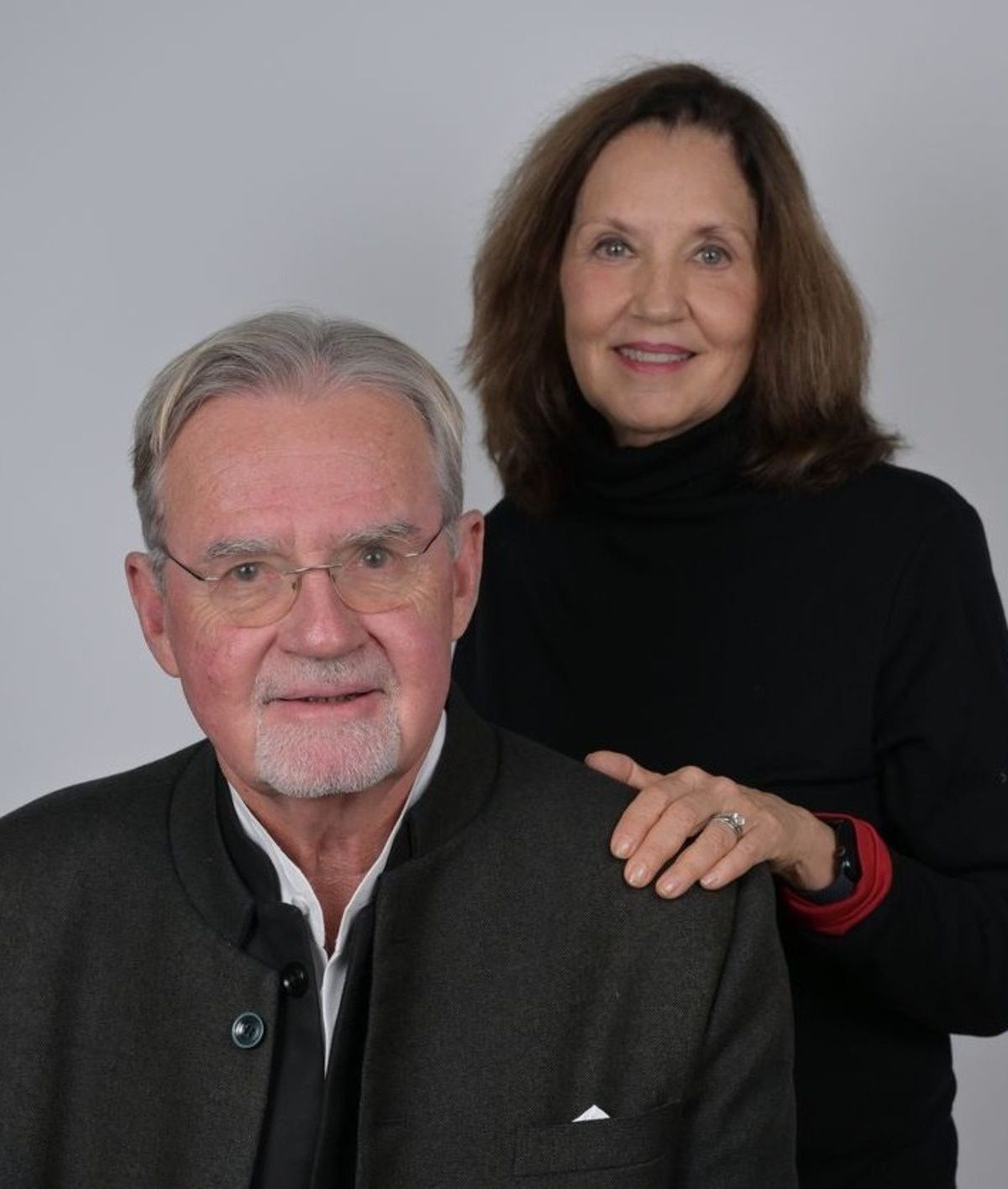
Kai Bird & Suan Goldmark
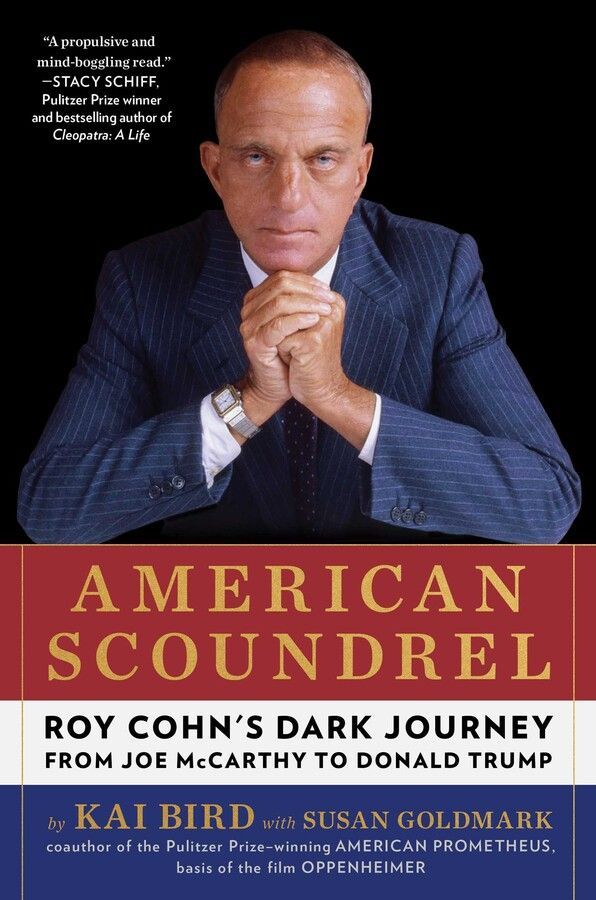

Kai Bird and Susan Goldmark on Roy Cohn's dark path from Joe McCarthy to Donald Trump
Every book needs a title, and Kai Bird knew his back when the pitch itself was a tough sell. “It was hard to persuade publishers in 2022 that Roy Cohn was a significant historical figure,” he said.
This sounds almost quaint, coming from the Pulitzer Prize-winning coauthor of American Prometheus, the inspiration for the movie, Oppenheimer.
Rather than an insignificant figure, Bird described Roy Cohn as the "connective tissue" linking two eras of American politics, a theme captured by the bestseller's title, American Scoundrel: Roy Cohn's Dark Journey from Joe McCarthy to Donald Trump.
However, the "Scoundrel" part didn't sit well with co-author Susan Goldmark, Bird's wife. British friends thought it soft: "It's not really very derogatory." The authors tried on other descriptors for a year: Mephisto, Mephistopheles, plain old Devil. ("But that was too much.") "Scoundrel" stuck, Goldmark said, "because we couldn't think of anything else."
Bird suffered no such doubts. "I would argue that Roy was a scoundrel, but he was a model for a long history of scoundrels in this country."
Political leaders knew about Cohn's shady shenanigans. "They knew what he had done during the McCarthy era," Bird said. "Everyone knew he was" a lawyer for mob bosses. Prosecutors pursued him. Journalists exposed him. Yet "we New Yorkers managed to turn a blind eye to all this. That's the real mystery."
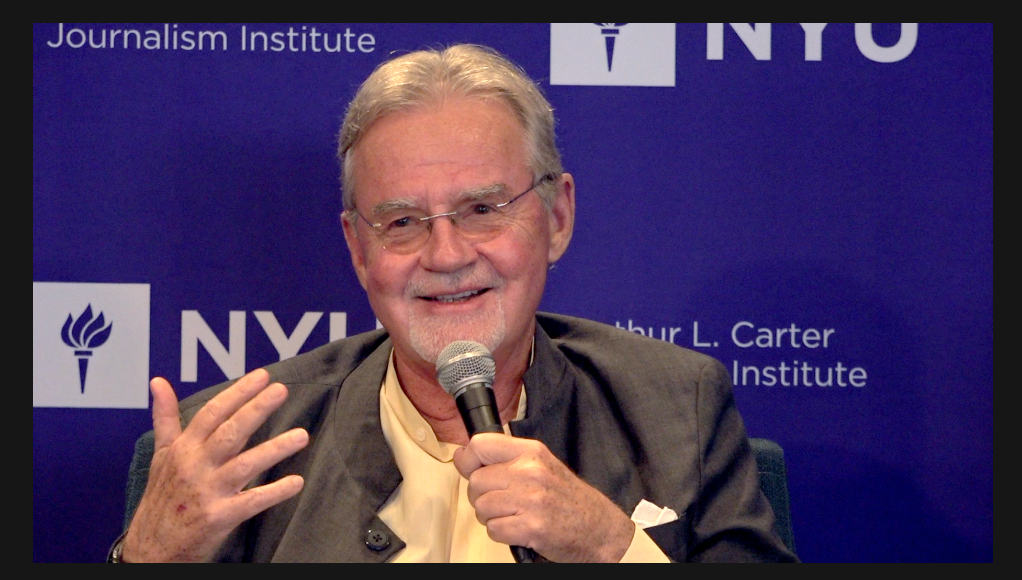
That contradiction was a recurring theme at the Silurians Press Club's Sept. 16 luncheon at NYU's Arthur L. Carter Journalism Institute, where Bird and Goldmark spoke before a sold-out crowd in conversation with journalist and author David Margolick.
After Cohn relocated from Washington to New York, he represented mob figures, cultivated politicians and gossip columnists ("He had a direct line to all of them," Goldmark said, "and he loved to be in the papers.")
He also met a young, insecure real-estate developer named Donald Trump, who became Cohn’s protégé.
Bird said, “He (Trump) was in debt to Roy Cohn” for the zoning variances and tax abatements on the Commodore Hotel deal, the introductions around society, and the call to Si Newhouse that landed Trump a book contract, The Art of the Deal, turning "a parochial real estate celebrity in New York City into a somewhat national figure."
Cohn’s playbook summarized: never admit fault, sue rather than settle, deny everything even under oath, stall and intimidate, treat loyalty as transactional, and work the press to shape your own myth. Sound familiar?
Cohn "was a sociopath," Goldmark said, "yet he knew how to be charming." The charm was transactional: "If you were his friend, he was very nice to you. And as long as you were loyal to him, he would continue to be nice to you."
Cohn first became prominent as a young assistant U.S. attorney helping prosecute Julius and Ethel Rosenberg for espionage in 1951, a case that ended in their execution.
Ivy Meeropol, the Rosenbergs' granddaughter, was in the audience. Bird and Goldmark credited Meeropol, the documentarian behind Ask E. Jean and Bully. Coward. Victim. The Story of Roy Cohn (HBO), with important material for the book. Also in the audience was Anne Roiphe, journalist, author, and Cohn's cousin, who also attended and gave the authors firsthand accounts of his character, quoted throughout the book.
Two years later, Cohn became chief counsel to McCarthy, hounding Army lawyer John Adams so relentlessly that Adams kept a chronology of it. When McCarthy turned on Eisenhower personally, Adams brought the file to the attorney general, then leaked it to the press. Cohn's counter was to hastily manufacture eleven memos. "They were forgeries," Bird said. "And he testified that they were real." Cohn lost his job. So did Adams.
Decades later, dying of AIDS, Cohn got a going-away party at Mar-a-Lago. After the guests left Trump had the housekeeper scrub the silverware with Clorox. Yet at the funeral, By one account Trump was seen weeping at the funeral. After the 2016 election, Roger Stone called to congratulate the president-elect, whose first reaction was to bring up his old fixer: "Oh boy, we miss Roy. He would have loved to see this."
The book's grimmest material comes in its closing section, "The Predator." Cohn was, Bird said flatly, "a sex addict." The book documents a Venice encounter with a sixteen-year-old boy trafficked out of a Northern Ireland orphanage, part of a ring that supplied children to prominent figures in British society. The survivor, now in his sixties, won a judgment against the Northern Ireland government this past July, aided in part by Goldmark's own research.