


Maggie Haberman

Maggie Haberman on Trump’s Expanding Power and the Erosion of Democratic Norms
By Mel Laytner
At a moment when presidential power is being stretched as rarely before, few journalists can offer a better perspective than Maggie Haberman, who chronicled the chaos, rivalries and feuds that defined Donald Trump’s rise and first presidency.
Speaking at the Silurians Press Club’s Nov. 18 luncheon, however, Haberman suggested that the real story is no longer Trump himself. What matters more, she said, is the unprecedented concentration of executive power and the erosion of traditional constraints on the presidency.
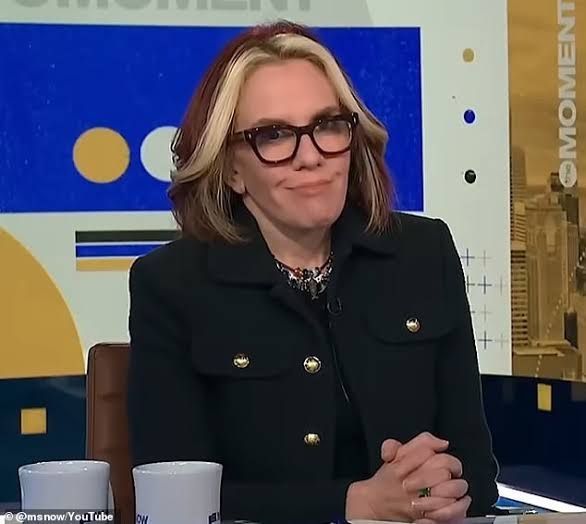
In conversation with New York Times contributing opinion writer and MS NOW commentator Molly Jong-Fast, Haberman gave the 150 Silurians and guests gathered at the 1 West Club a primer on the inner workings of Trump 2.0.
Haberman and her Times colleague Jonathan Swan were already working on their book when Trump returned to office. “Within about three months, it became clear to us also that we had to refocus our aperture on what this book was going to be, because we were covering an expansion of executive power that we have never seen before in our lifetimes,” she said.
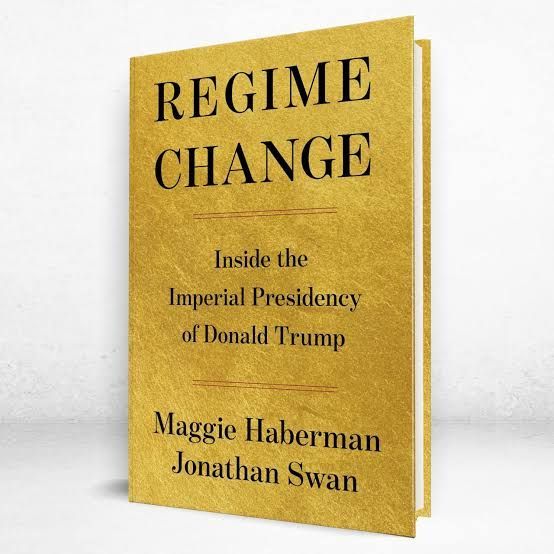
The result was Regime Change: Inside the Imperial Presidency of Donald Trump, an account of the first 14 months of his second term. The title, she said, had nothing to do with Iran or Venezuela: “We were witnessing a form of regime change in our own country.”
Haberman singled out Stephen Miller and, to a lesser extent, Russ Vought as figures who had spent years studying which “pockets of independence, so-called independence, inside the executive branch” they could take over to expand executive power.
Their approach rested in part on the unitary executive theory: “all power in the executive branch flows from the executive,” she explained.
After Trump won in 2016, she said a Democratic operative told her, “The country is about to find out how much of our system is norms and not laws.”
“It still holds true,” Haberman said. There has been “a rolling education on that front.”
Miller’s role in staffing, she said, remains underreported. “He’s not a lawyer, but he spent a lot of time thinking about the kinds of lawyers to stock the government with.”
Haberman described him as skilled at “managing up” and telling Trump, “I can make that happen.” As chief of staff, she said, he now has an even tighter grip.
When process becomes punishment
Among the book’s most revealing episodes, Haberman said, is how senior Justice Department officials, including Todd Blanche, now the attorney general, warned the White House that indictments of New York Attorney General Letitia James and former FBI Director James Comey were unlikely to produce convictions.
Trump wanted Blanche to understand that he didn’t care whether the case against James ended in a conviction. “I want to make her miserable,” he said. Much of the process, Haberman noted, is the punishment.
Those tactics will sound familiar to Silurians who attended the club’s September luncheon featuring historian Kai Bird and his wife and chief researcher, Susan Goldmark, co-authors of American Scoundrel: Roy Cohn’s Dark Journey from Joe McCarthy to Donald Trump.
The authors recounted how Cohn, representing the Trump Organization, accused a prosecutor of threatening witnesses.
After a two-week investigation turned up no evidence, the judge said, “I think you should withdraw your allegation.” Cohn’s chilling response: “Well, Judge, I think the girl has learned her lesson. So we will drop it.”
While the episode does not prove that Trump consciously mimicked Cohn, the parallel is hard to miss.
Haberman resisted attributing the number of women fired from senior posts in the Trump administration to misogyny alone. “The fact that it exists doesn’t mean causality,” she said. She noted that Trump made Susie Wiles the first woman White House chief of staff; that Karoline Leavitt left voluntarily; and that, in her view, Katie Zacharia’s five-day tenure as press secretary had nothing to do with her being a woman.
“I don’t think that he’s a bra-burning feminist,” she said.
What comes after Trump?
While the Iran war, affordability and corruption all contributed to “a Watergate-level wipeout” in the midterms, Haberman said, those who voted against Trump had not necessarily become Democrats. Many were swing voters who had backed him as an outsider willing to challenge a system that protected elites. Instead, “He became the elite. He became just another politician.”
Rejecting claims that reporters hoard scoops for books, Haberman said every significant finding had run in the Times first. “Our job is to inform the public. Our job is not to try to impact the outcome of an election. That’s what partisans do.”
——
Mel Laytner, a Silurian board member, was a reporter and editor of hard news for 20 years, much of it covering the Middle East for NBC News and UPI. He is author of What They Didn't Burn, an acclaimed investigative memoir.